
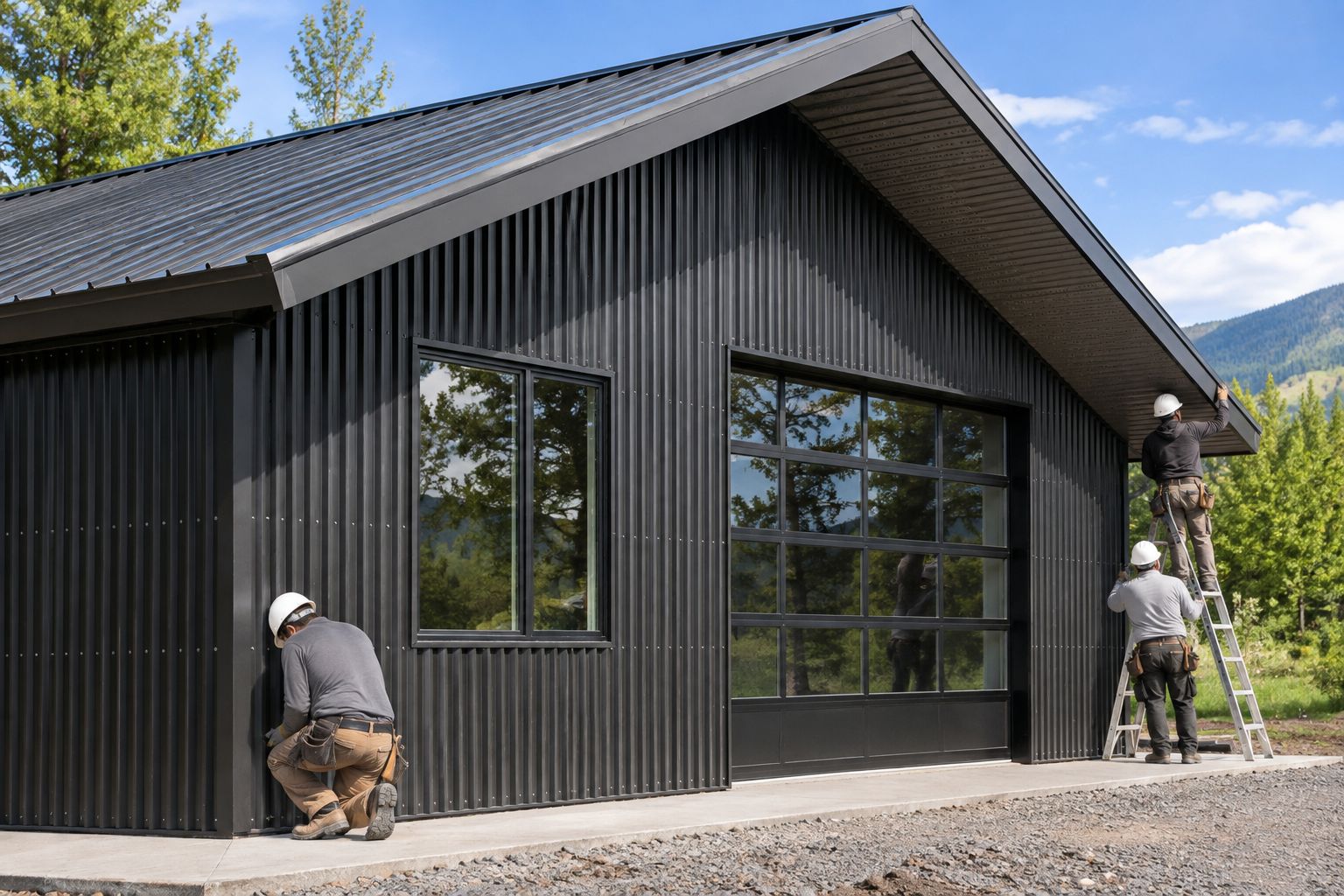
Why order exact lengths
Instead of buying standard sheets and trimming them, you list every length you need and the count of each. You get:
- Far less cutting on the job, which saves time and keeps the paint sealed at the ends
- Hardly any scrap to haul off
- A single sheet from eave to peak on most roofs, with no end laps to seal
- Quicker installs, because each sheet already fits its spot
Building the list
On each roof face or wall, take the length from the bottom edge to the top edge following the slope. Don't measure the flat distance.
Add the overhang at the eave plus whatever the ridge and trim details need.
Take the width of that face, divide by what one panel covers, and round up.
At hips, valleys and gable ends, list the longest length each angled piece will be cut from.
Put each line as count and length, for example 24 @ 16′ 4″, and group the lines by roof face or wall.
Main roof, south: 24 @ 16′ 4″ · Main roof, north: 24 @ 16′ 4″ · Porch: 12 @ 8′ 2″ (confirm the pitch works) · Shop end wall: 14 pieces, longest 11′ 6″, trimmed to the rake on site
Very long panels
Long sheets can be produced, but trucking and handling put a ceiling on it, and sheets well past the length of a normal trailer may need special freight. Long runs also need clips or a fastening method that lets them expand. Point out any long panels when you send the list.
Tips
- An aerial roof report includes the slope lengths, which makes the list quick.
- Add a few short spare panels for repairs and miscuts.
- If the bundles come tagged, hang on to the tags until the job is done.
Questions we hear
Can I buy standard lengths instead?
Yes. Some panels and nearly all trim are stocked in set lengths.
What if a length is wrong?
Panels made to length usually can't be returned. Check the list twice, or send the drawings or a roof report so someone can check it against them.
Is trim cut to length too?
Most trim comes in standard pieces, typically around 10′. Custom pieces are bent from your sketch; see trim and flashing.