
Side by side
| Clay tile | Concrete tile | Lightweight concrete | Natural slate | Synthetic slate | |
|---|---|---|---|---|---|
| Made of | Kiln-fired clay | Sand, cement, pigment | Concrete with lighter aggregate | Quarried stone, hand-split | Polymer or composite |
| Lb per SQ | About 600–1,800, by profile | About 900–1,200 | About 550–750 | About 800–1,500, by thickness | About 200–400 |
| Service life | 50–100+ years | 50+ years | 40–50+ years | 75–100+ years (S1 grade) | 40–50 years |
| Typical home | Spanish, Mission, Mediterranean | Subdivisions, custom homes | Re-roofs with weight limits | Historic and high-end | Slate look, light load |
One SQ covers 100 sq ft. Exact figures depend on the product; your quote has them.
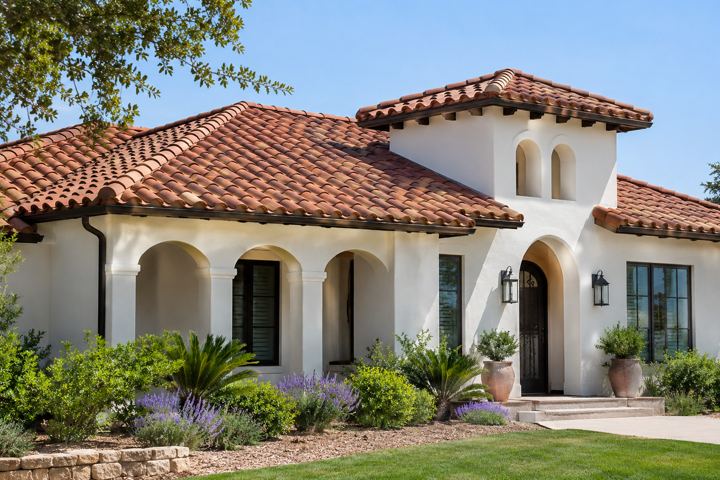
The color is fired into the body of the tile, not painted on, which is why old clay roofs still look right. Barrel, flat and interlocking shapes.
The budget-friendlier tile, made in high, medium and flat shapes and a long list of colors. Everywhere in Sun Belt subdivisions.
For houses that weren't framed for full-weight tile.
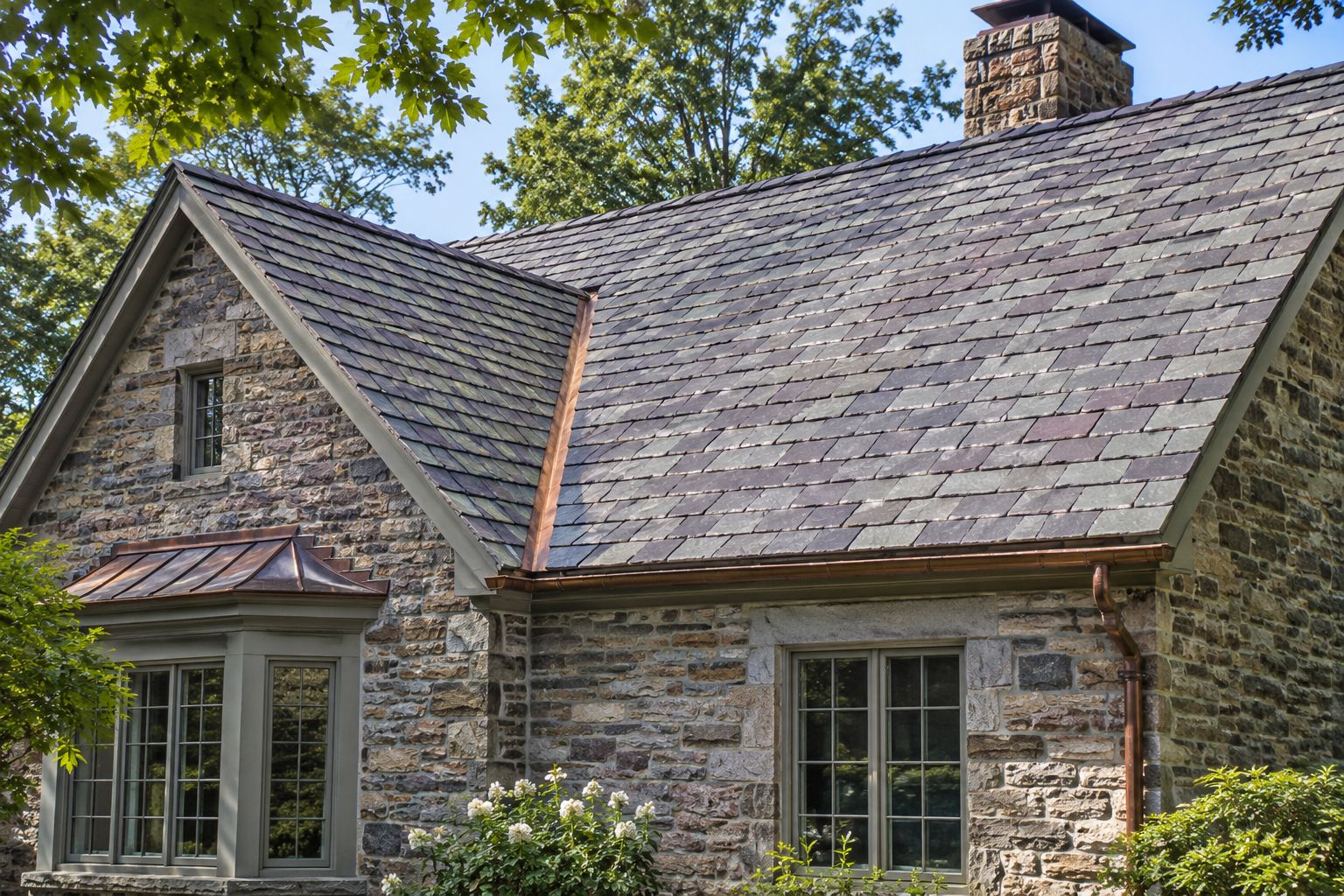
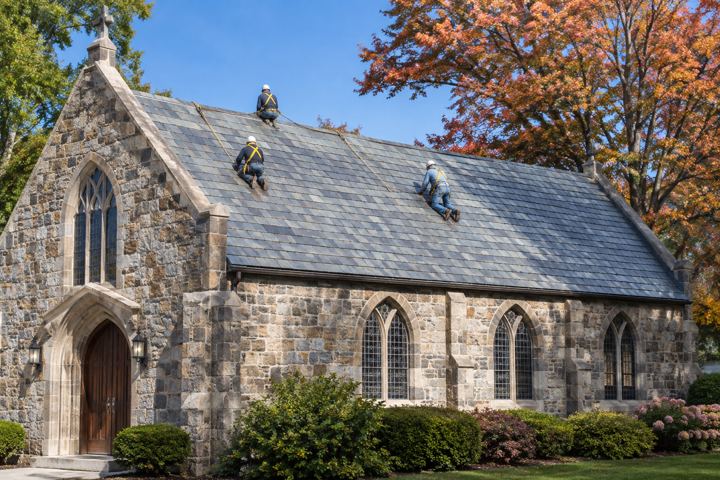
Stone split by hand, so every piece is slightly different. It doesn't burn, doesn't fade and asks for almost no maintenance. Pre-assembled slate panels go on faster and weigh less.
A molded look-alike: far lighter, easy to cut, often impact-rated.
Shape and color
High-profile barrel or S-tile throws deep shadows for the classic Spanish roof. Medium profiles have a gentler wave. Flat tile suits modern houses and mimics slate or shake. Production runs can vary a shade, so buy the whole roof in one order.
Can the house carry it?
Both tile and real slate weigh several times what shingles or metal do. Before switching from a lighter roof, get the framing checked by a qualified professional. If the house already has tile, it was usually built for it. When weight is a problem, look at thinner slate, slate panel systems, lightweight concrete or synthetic slate.
On the job
- Pitch: clay and concrete tile are code-approved to 2½:12, with two layers of underlayment under 4:12; certain profiles need 3:12 to 5:12. Slate laid the traditional way needs 4:12 or more.
- Underlayment: the tile or slate sheds the water; the layer beneath is what actually keeps it out. Tile-rated and two-ply systems are common.
- Battens: tile frequently hangs on wood battens, which help drainage and airflow.
- Attachment: fastened with nails, screws, clips or foam adhesive, often more than one, set by wind zone and code.
- Finishing pieces: hip and ridge, rake tiles, bird stops, eave closures, flashing.
Use crews experienced with tile or slate, and follow the maker's guide and local code.
Questions we hear
Can people walk on tile?
Carefully, stepping low on each tile near the overlap, or on walk pads.
One tile cracked. Now what?
It can be replaced on its own. Keeping a few spares from the original order makes the color match easy.
Why so much attention to underlayment?
Because on a tile roof it's the waterproofing. Re-roofs often reuse sound tile over new underlayment.
Real slate or synthetic?
Real slate lasts a century or more and won't burn. Synthetic costs less and weighs less, but doesn't last as long.