
Insulation
| Product | Description | R-value, typical | Best for |
|---|---|---|---|
| Metal building blanket | Fiberglass with a vapor-retarder facing laminated on | R-10 to R-30, depending on thickness | Metal building roofs and walls |
| Reflective | Foil faces over a bubble or foam middle | Depends on how it's installed | Barns, garages and shops under a metal roof |
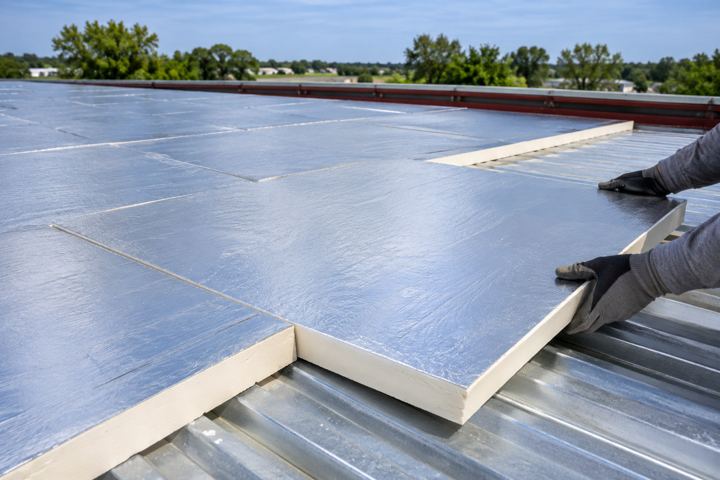
| Polyiso | Rigid foam board with facers | About R-5.6 to R-6 an inch | Flat commercial roofs and walls |
| Tapered polyiso | Polyiso cut on a slope | Changes with thickness | Pitching a flat roof toward its drains |
| Cover board | Gypsum or dense fiberboard | Low | Between the foam and the membrane |
| EPS / XPS | Polystyrene board, expanded or extruded | About R-3.6 to R-5 an inch | Walls, foundations, some roofs |
| Closed-cell spray foam | Sprayed on, expands in place | About R-6 to R-7 an inch | Metal buildings, houses, sealing air leaks |
R-values and facings differ by brand and thickness.
Why metal buildings "sweat"
When warm, humid air inside hits the cold underside of a steel roof, it condenses. The drips stain, rust the framing and soak whatever is stored below. The cure is insulation with an unbroken vapor retarder, taped at every seam and sealed at the edges, so that air never reaches the steel. A side benefit: rain and hail get much quieter.
Roof coatings
| Where it shines | What to know | |
|---|---|---|
| Silicone | Flat roofs, including spots that pond | Stands up to sun and to water that sits |
| Acrylic | Metal and pitched roofs in dry regions | Water-based and very white |
| Polyurethane | Roofs that get walked on or hit | Hard-wearing; usually a base coat and a top coat |
| Elastomeric | Metal, mod-bit and more | Stretches as the roof moves, then returns |
| Rust primer | Metal with rust | Applied before the finish coat |
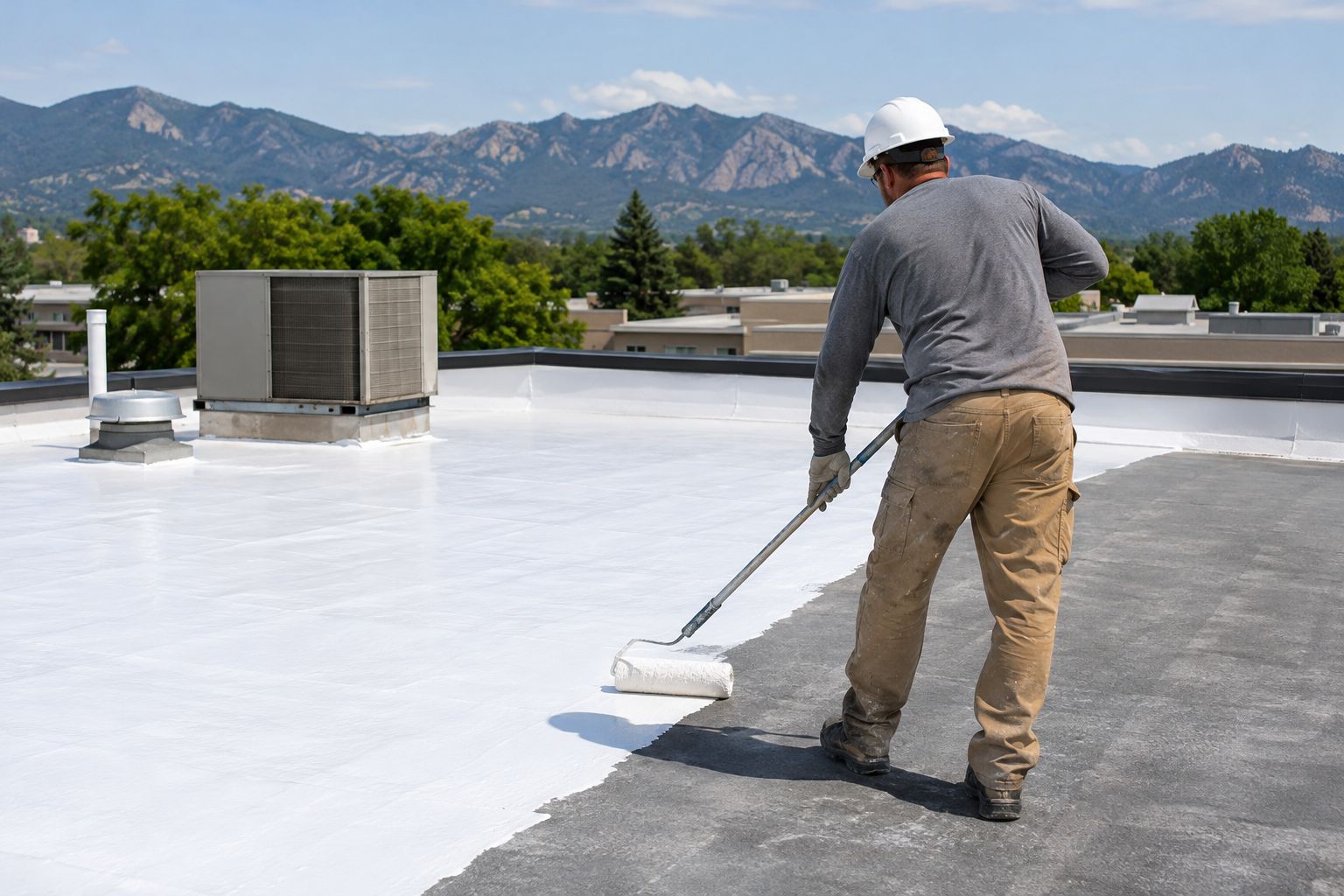
A white coating keeps the roof surface cooler, which can lower the air-conditioning load. It can't save a roof that's failing or one with wet insulation under it.
Bringing back a metal roof
- Wash it and knock off any loose rust
- Snug down or swap out loose and worn screws
- Seal the seams, laps and screw heads with tape or brush-on sealant
- Prime the rusted spots
- Roll or spray the base and top coats to the thickness on the label
Installing it
- Metal building blanket is pulled tight between the framing and the panels, with facing tabs overlapped and taped.
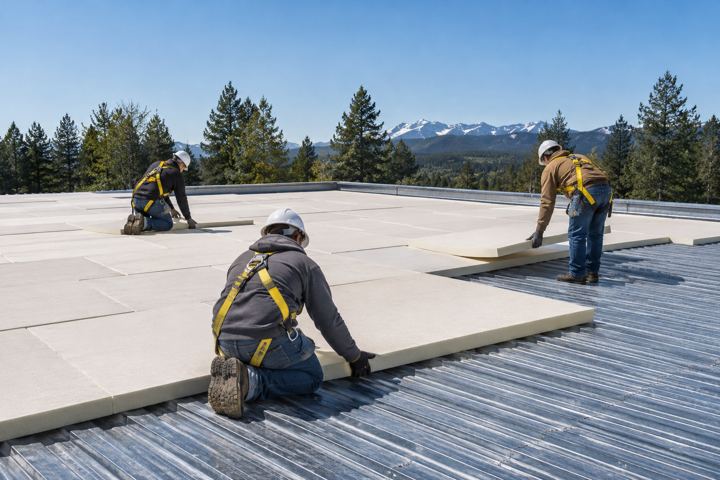
- Rigid board goes down with screws and plates or with adhesive, as the roof system specifies.
- Coat only in dry weather, within the temperature range and at the thickness the label gives.
Questions we hear
What R-value should I use?
That's set by the building, how it's used and the local energy code. Send us the building, its location and what the drawings specify.
Will insulation stop the dripping?
A sealed vapor retarder is what does it. Good ventilation helps too.
How long will a coating last?
Usually 10 to 20 years, by product, thickness and climate, and most can be recoated when the time comes.
Can every roof be coated?
Most sound metal, mod-bit, single-ply and built-up roofs, yes. Wet or badly damaged areas get repaired first.