
Screws, rivets and nails
| Description | Common sizes | Goes into | |
|---|---|---|---|
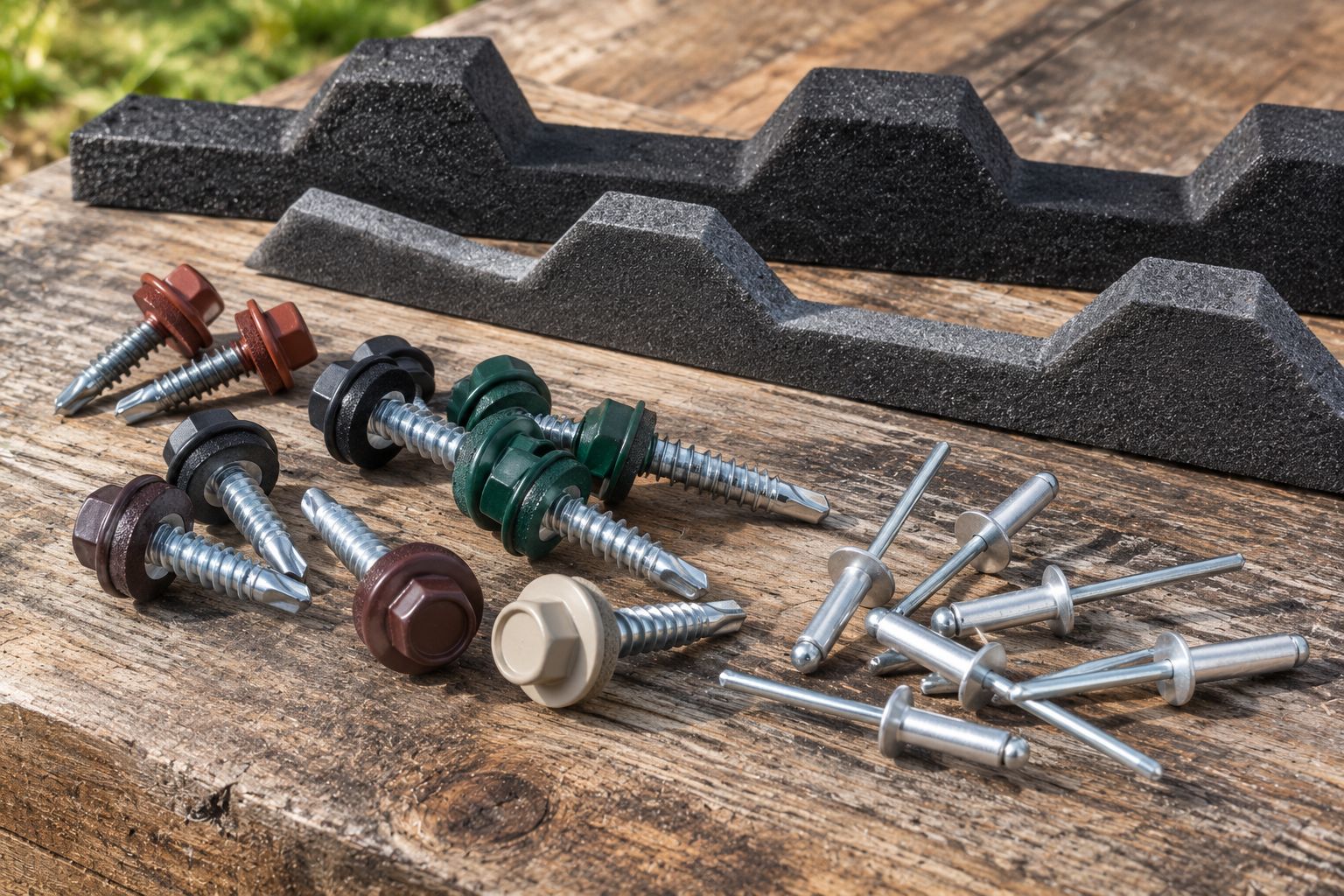
| Wood-grip screw | Sharp tip and a rubber-washered head | #9–#10, 1″–2½″ | Panels over wood purlins or plywood |
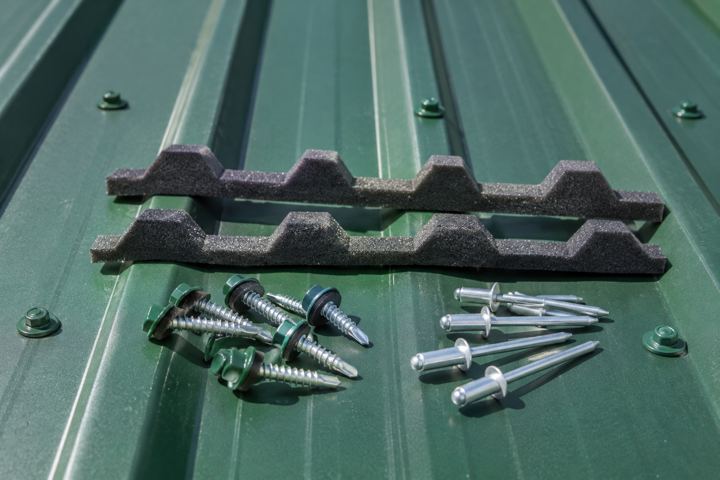
| Self-drilling screw | A small drill bit for a tip, washered head | #12–#14, ¾″–2″ | Panels over steel purlins and girts |
| Stitch screw | Short, joins metal to metal | #12–#14, about ¾″–1″ | Panel side laps and trim to panel |
| Pancake head | Flat, low head, no washer | #10–#12, 1″–1½″ | Standing seam clips and nail flanges |
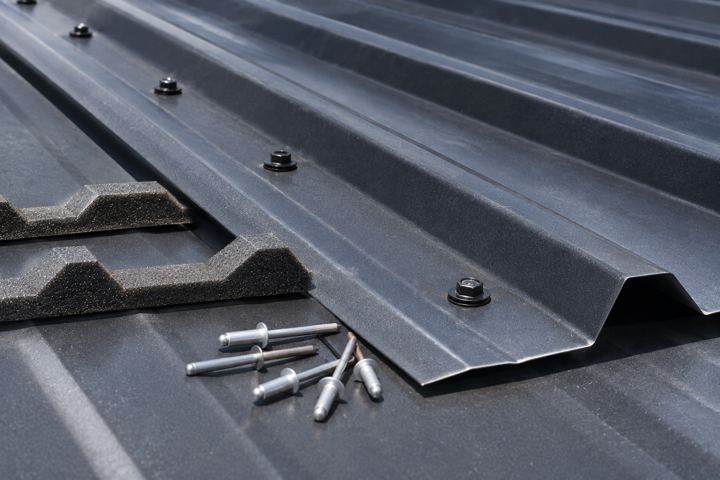
| Pop rivet | Set from one side, bare or painted | ⅛″ and 3/16″ | Trim, gutters, flashing |
| Roofing nail | Hand or coil | 1¼″–2″ | Shingles, felt, some tile |
| Cap nail or staple | With a plastic washer | 1″ and up | Synthetic underlayment |
| Tile fastening | Nails, screws, clips or foam | Varies | Clay and concrete tile |
Tip styles, coatings and lengths depend on the brand.
The washer. Most panel screws carry a bonded EPDM washer. It should end up seated flat and snug. If it's squeezed out past the head, the screw is over-driven.
Corrosion. Coated screws with painted heads for most work. Near salt water or chemicals, use stainless-capped or all-stainless.
Wood or steel? Wood-grip into wood, self-drilling into steel, and pick the drill tip by how thick the steel is.
Sealants and tape
| Description | Where it goes | |
|---|---|---|
| Butyl tape | Tacky strip that never fully hardens | Side laps, closures, trim overlaps |
| Polyurethane | Hard-wearing and paintable | Trim and flashing seams |
| Silicone | Stays flexible, shrugs off sun | Metal and flat-roof details |
| Tri-polymer or hybrid | Grips metal and keeps moving with it | Metal roofs and gutters |
| Roof cement | Asphalt-based mastic | Patching shingles and flat roofs |
| Tile foam | Expands as it sets | Bedding tile, filling gaps |
Accessories
- Closures. Foam or rubber strips shaped to the rib. Inside closures go at the eave, outside closures at the ridge; vented ones let the ridge breathe.
- Pipe boots. Rubber or silicone with a bendable base for metal roofs; lead or plastic flashings on shingle roofs.
- Snow guards and snow bars. Stop a whole roof of snow from letting go at once. Clamp-on styles grab the standing seam without drilling.
- Seam clamps. Mount solar racks, snow guards and lifelines to standing seam.
- Curbs and jacks. Frame in AC units, skylights and other openings.
- Touch-up paint. For scratches and cut edges.
Getting it right
- Follow the panel maker's screw pattern and count.
- Drive square to the panel and stop as soon as the washer seats. Tilted and over-tightened screws are where leaks start.
- Brush off the metal shavings before you leave each day; left overnight they rust and stain the paint.
- Tape and closures go down first, then the panel or trim on top.
Questions we hear
How many screws in a square?
Plan on about 75 to 80 for exposed-fastener panels. The maker's screw pattern gives the exact figure.
Do the heads have to be painted?
Not required. They look far better painted, and the paint adds a layer of protection.
What sealant works on metal?
Butyl tape in the laps, tri-polymer or similar on trim. Pass on anything that isn't labeled for metal and sunlight.
Which drill tip?
One sized to the steel you're going into. Heavier purlins need a longer tip.