
Choosing an underlayment
| Made from | Per roll | Heat | Use it for | |
|---|---|---|---|---|
| Felt (#15 or #30) | Paper or fiber mat soaked in asphalt | 2–4 SQ | Standard | Low-budget shingle jobs; some tile |
| Synthetic | Woven or spun-bonded plastic | 4–10 SQ | Standard, some to 240°F+ | The default under shingles and many metal roofs |
| High-temp synthetic | Synthetic built to take the heat under steel | 4–10 SQ | 240–260°F+ | Standing seam and other metal |
| Peel-and-stick | Rubberized asphalt or butyl with a release film | About 2 SQ | Standard or high-temp | Eaves, valleys, around openings, low pitches |
| Tile underlayment | Heavy felt, mineral-surfaced sheet or peel-and-stick | Varies | Standard to high-temp | Clay and concrete tile |
Each brand rates its own rolls a little differently; the numbers for your order are on the quote.
Cheap, but heavy, easy to tear, and it puckers once it gets wet.
Light, tough, and a roll goes a lot further. What most new roofs get today.
Made to sit under hot steel without breaking down. Plenty of panel warranties call for it.
Bonds to the deck and closes up around every nail. Goes in the trouble spots, or across the whole deck where code wants it sealed.
Attic ventilation
The idea is simple: fresh air comes in at the bottom of the roof and hot, wet air leaves at the top. Skip it and the shingles bake from below, and winter moisture turns into mold and soft decking.
| Vent | Job | What to know |
|---|---|---|
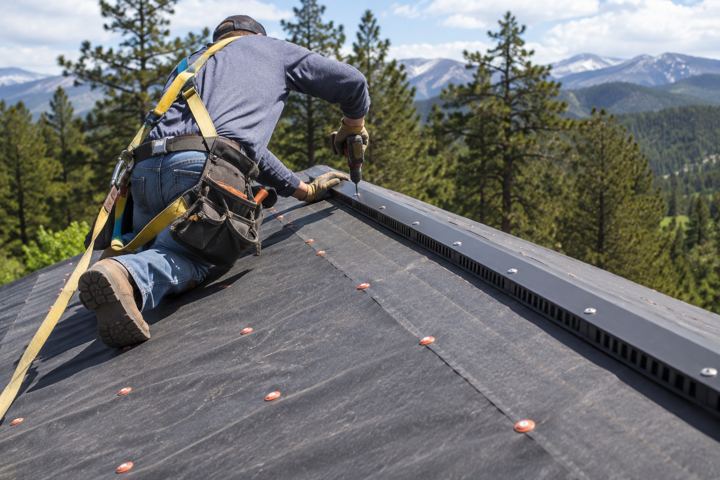
| Ridge vent | Lets air out | Hidden under the ridge cap; spreads the exhaust along the whole peak |
| Box vent | Lets air out | Separate square vents set high on the roof |
| Turbine | Lets air out | Spun by the wind |
| Powered or solar fan | Lets air out | A motor does the pulling |
| Gable louver | Either | Set in the end wall |
| Soffit vent | Lets air in | Vented soffit panels or cut-in vents |
| Edge intake | Lets air in | Sits at the eave on houses with no soffit |
Getting the numbers right. Codes generally want 1 sq ft of net free vent area for each 150 sq ft of attic floor. That drops to 1 per 300 when 40%–50% of the vent area sits high and the rest sits low, and in the coldest zones the 1:300 option also needs a vapor retarder at the ceiling. Don't give the attic more exhaust than intake, and don't mix exhaust styles in one attic; shingle and vent makers both warn against it. Your local code has the last word.
Metal roofs vent through breathable ridge closures, and battens or purlins leave an air gap under the panels.
Laying it down
- Begin at the eave; each course overlaps the one under it.
- Use the lap and nail spacing printed on the roll. Synthetics go down with cap nails or cap staples.
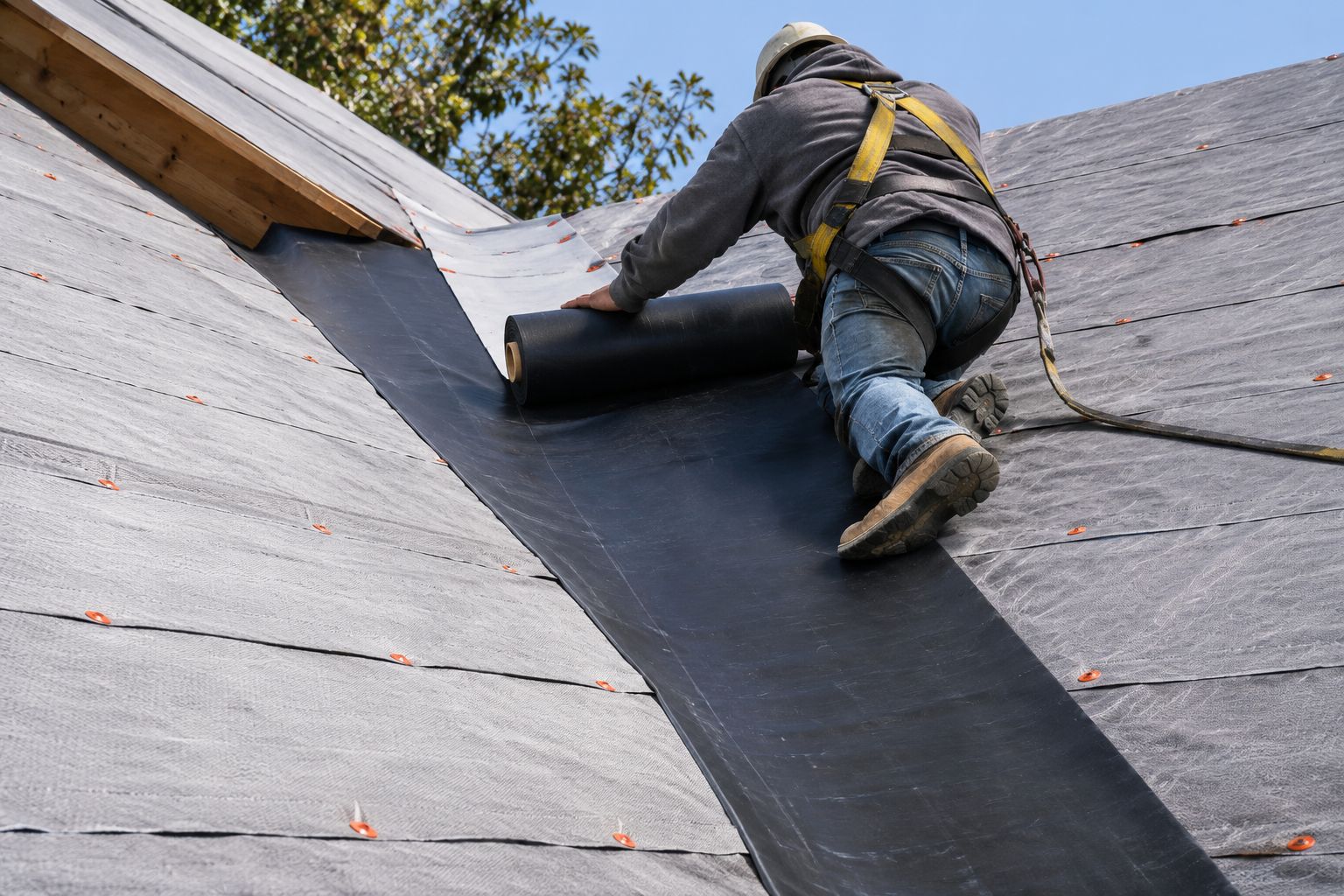
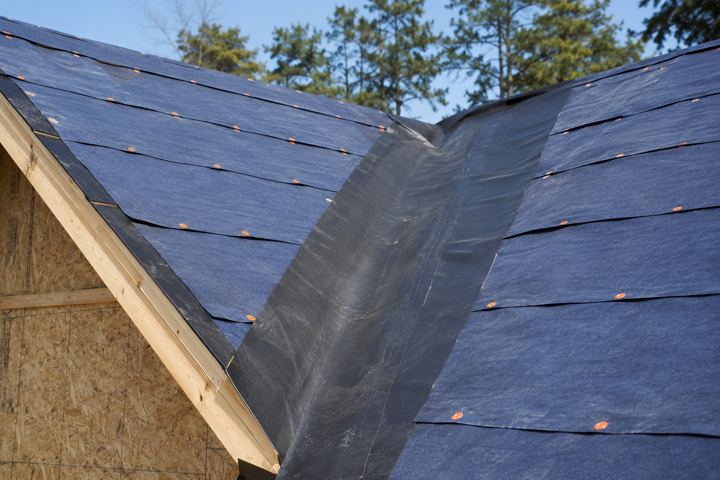
- Peel-and-stick goes first in the eaves, valleys and around openings, and the field sheet laps on top of it.
- Each synthetic has a limit on how long it can sit in the sun uncovered. Stay inside it.
Questions we hear
Does metal really need high-temp underlayment?
Most panel makers say so, and it matters most with dark colors and hot regions.
Felt or synthetic?
Synthetic on most roofs. Felt still turns up under certain tile and on the cheapest jobs.
Where is peel-and-stick a must?
Valleys and every roof opening at minimum. In snow country, code usually adds the eaves.
Is more ventilation always better?
No. Too much exhaust and too little intake can pull heated or cooled air up out of the house. Balance matters more than volume.