
The membranes
| Material | Thickness | How seams are joined | Where you see it | |
|---|---|---|---|---|
| TPO | Thermoplastic sheet, usually white | 45, 60 or 80 mil | Welded with hot air | Warehouses, stores, office buildings |
| PVC | Thermoplastic that holds up to chemicals | 50, 60 or 80 mil | Welded with hot air | Restaurants, plants, anywhere grease or chemicals land |
| EPDM | Synthetic rubber, black or white | 45, 60, 75 or 90 mil | Seam tape or adhesive | Big plain roofs, cold regions, re-roofs |
| Modified bitumen | Asphalt sheet with a reinforcing mat | Two or three plies; base about 50–90 mil, cap about 145–180 mil | Torched, cold-glued or self-adhered | Small commercial roofs, flat house roofs, roofs that get walked on |
| Built-up (BUR) | Alternating felts and asphalt, often gravel on top | Several plies | Hot or cold asphalt | Older buildings and patch work |
Sizes and colors differ by brand; the exact sheet is listed on your quote.
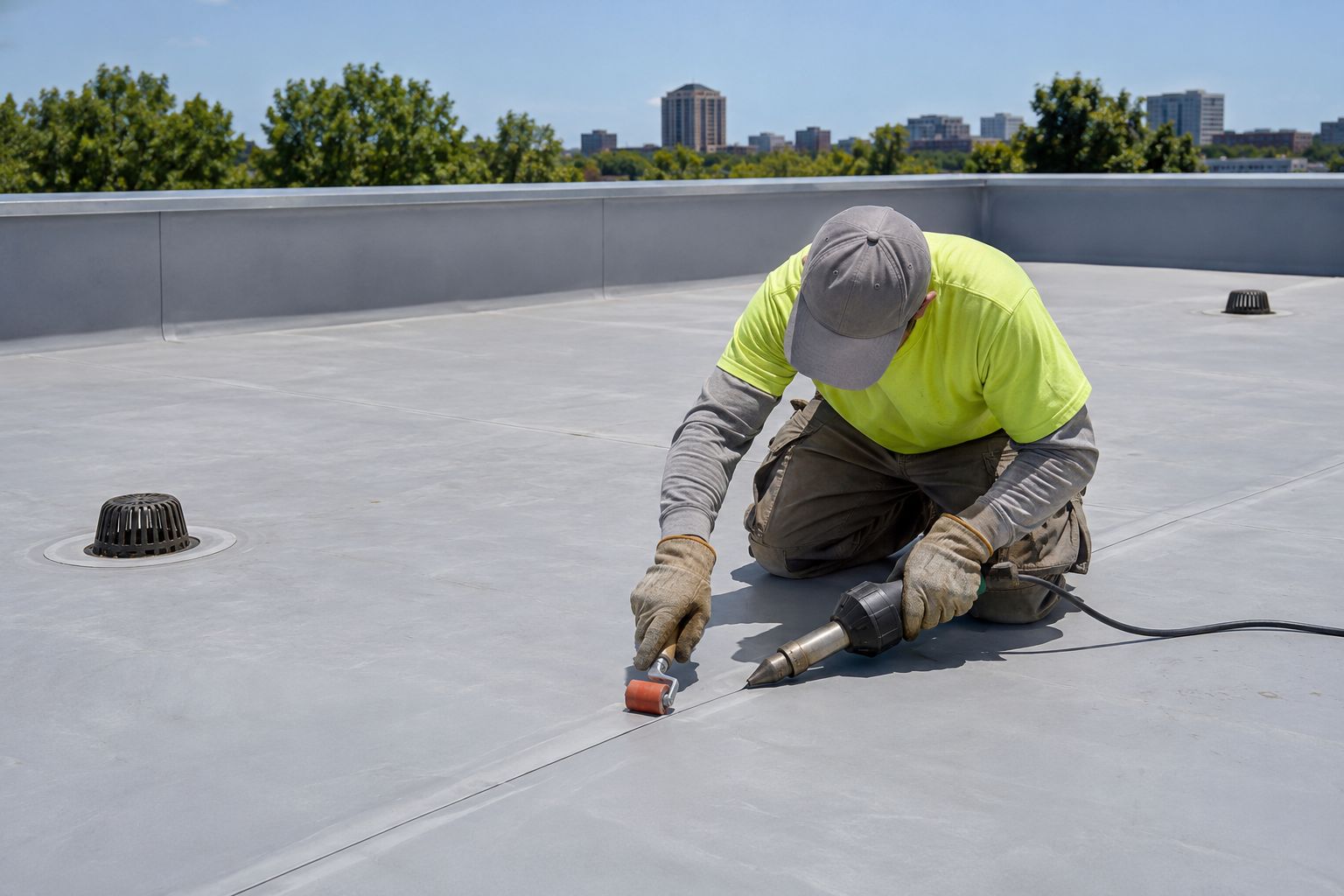
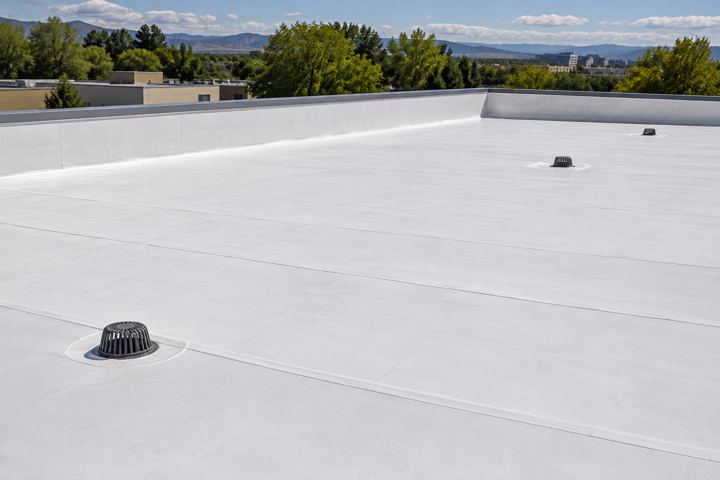
The seams are melted together, and the bright face throws back the sun. Among the most common commercial roofs in the country.
Goes down the same way as TPO, but grease, oil and many chemicals don't break it down.
Rubber roofing with decades behind it. The sheets come very large, so there are fewer seams to fail.
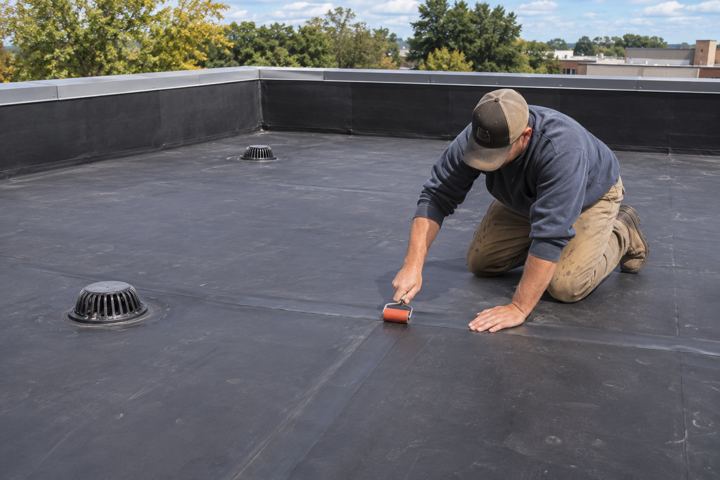
Rolled asphalt sheets laid in two or more layers. Takes foot traffic well.
The old layered method. Today mostly used to repair or match what's already there.
Holding the sheet down
- Mechanically fastened. Screws and plates along the seams. Quick and low-cost.
- Fully adhered. Glued across the whole surface to the insulation or cover board. Smoother, and better in high wind.
- Induction-welded. Plates under the sheet are heated and bond to its underside, so no fastener goes through it.
- Ballasted. Weighted with stone or pavers. Only where the structure and wind zone allow.
Under the membrane
Most commercial roofs carry rigid insulation. Polyiso is the usual board, and tapered polyiso creates the pitch toward the drains. On top of it, a cover board of gypsum or dense board protects the foam and gives the sheet a firm surface. The energy code for the building type and location sets how much insulation is required.
Coating instead of replacing
When the old roof is still dry and sound, a silicone or acrylic coating can seal it and reflect heat, often for years. More on insulation and coatings.
On the job
- "Flat" still needs pitch. Code generally wants ¼:12 or more on a new membrane roof, from tapered insulation or the framing.
- Every edge, curb, drain and opening gets flashing made for that membrane.
- Commercial warranties usually need a manufacturer-certified installer and a final inspection.
Questions we hear
Which membrane fits my building?
TPO for most new roofs; PVC where grease or chemicals land on it; EPDM for big simple roofs; mod-bit for small roofs and lots of foot traffic.
What does "mil" mean?
A thousandth of an inch. A 60 mil sheet is 0.060″ thick.
Can I go over the existing roof?
Often, if it's dry and code allows another layer. Wet insulation must be removed first.
Are flat roofs leak-prone?
Not when they're designed and built well. Most trouble comes from poor drainage, standing water and failed flashing.